Working at height is one of the most common high-risk activities, especial in workplaces located in marine and industrial environments. While much attention is often placed on working platforms and edge protection, the process of accessing elevated areas is equally important.
Workers climbing ladders, towers, tanks, or vertical structures face continuous exposure to fall hazards during ascent and descent. Vertical lifeline systems are designed to reduce these risks by providing ongoing fall protection throughout the climb.
What Is a Vertical Lifeline?
A vertical lifeline is a fall protection system that allows workers to remain connected while moving vertically.
Unlike temporary tie-off methods, vertical lifelines are designed specifically for climbing access. They provide a guided connection point that travels together with the worker during movement.
These systems are commonly installed on:
- Fixed ladders
- Ship access structures
- Storage tanks
- Towers and masts
- Industrial platforms
- Confined space access points
Their purpose is simple: to provide continuous protection during climbing activities.
How Vertical Lifelines Work
Most vertical lifeline systems consist of several core components.
Lifeline System:
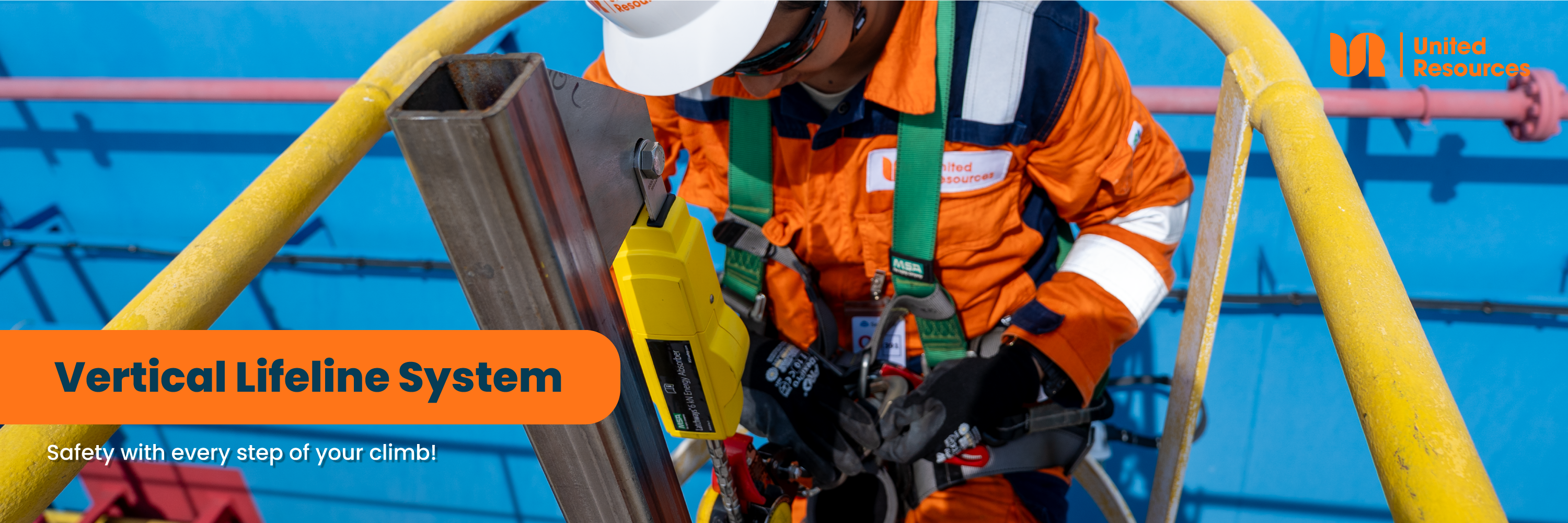
A lifeline is a flexible steel cable or a rigid rail system mounted vertically along the climbing path.
Guided Fall Arrester:
The worker connects to a guided fall arrester attached to the lifeline. As the user climbs, the device moves smoothly along the system.
If a sudden downward movement occurs, the device locks automatically to arrest the fall.
Harness Connection:
The system is connected to the worker’s full body harness, helping distribute forces safely in the event of a fall.
Anchorage:
The vertical lifeline is secured to structural anchorage points designed to support fall protection loads.
Where Vertical Lifelines Are Used
Vertical lifelines are widely used in environments where workers regularly move between levels or access elevated areas.
Typical applications include:
- Ship and marine access ladders
- Industrial maintenance platforms
- Tank inspection and cleaning
- Warehouse access structures
- Utility towers
- Confined space entry systems
These systems are especially useful in areas where conventional guardrails or stair access may not be practical.
Why Vertical Lifelines Matter
Climbing tasks are often repetitive and routine, which can sometimes lead to complacency. However, even a short loss of footing at height can result in serious injury.
Vertical lifelines help improve safety by:
- Providing continuous connection during climbing
- Reducing free-fall distance
- Supporting safer access to elevated areas
- Allowing greater confidence during movement
- Supporting work at height compliance requirements
They also help create more structured and consistent access procedures across worksites.
Inspection and Maintenance
Like all fall protection equipment, vertical lifelines should be regularly inspected to ensure proper condition and performance.
Inspection may include:
- Checking for corrosion or wear
- Assessing cable tension and alignment
- Inspecting connectors and moving components
- Verifying anchorage integrity
At United Resources, we support customers with:
- Site assessments
- Installation support
- Inspection services
- Maintenance recommendations
This helps ensure systems remain reliable throughout their operational lifespan.
Supporting Safer Access
Safe operations begin before the task itself starts. Ensuring workers can access elevated areas safely is a key part of effective workplace safety planning.
Vertical lifelines provide a practical and reliable way to support safer climbing in marine and industrial environments.
Because when working at height, ascending safely is the first and most important step.