Working at height remains one of the most hazardous activities that a worker does. It is especially prevalent in industries such as construction, marine, and maintenance. Falls from height continue to rank among the leading causes of workplace injuries and fatalities each year. Thankfully, with the appropriate engineered systems and safety culture, these risks can be effectively managed.
One of the most versatile and widely used solutions for fall protection is the horizontal lifeline system, a critical safeguard for anyone working on roofs, bridges, or other elevated structures.
What is a Horizontal Lifeline?
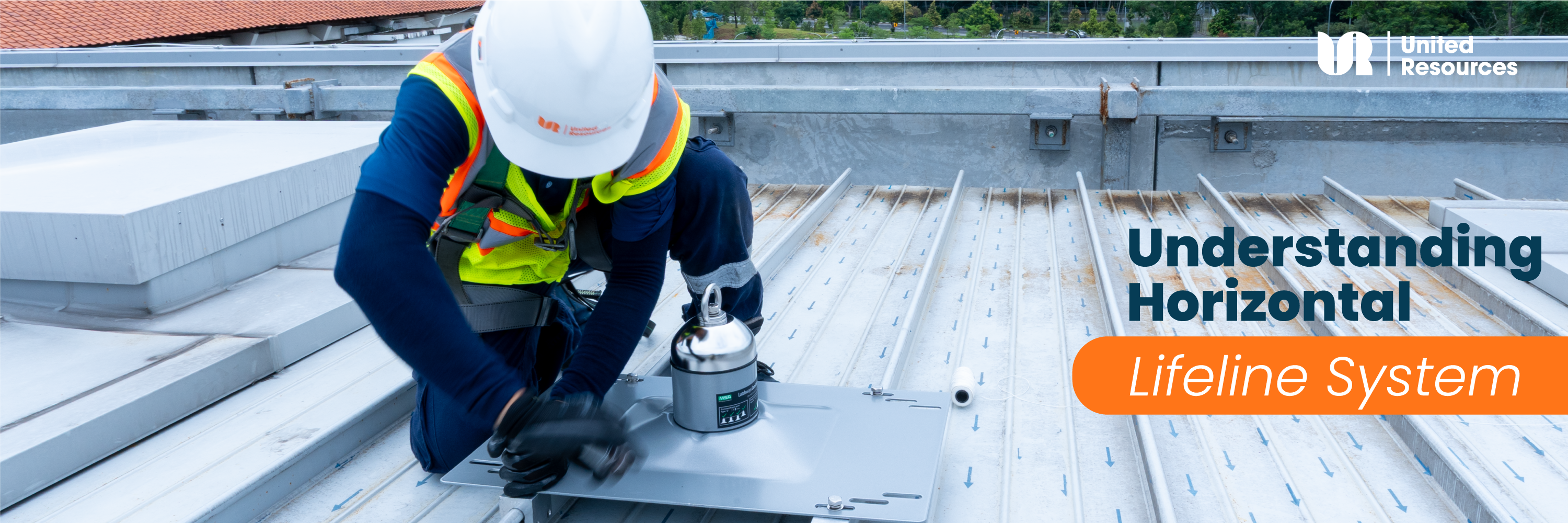
A horizontal lifeline (HLL) is a type of fall protection system that allows workers to move safely along an elevated surface while remaining continuously connected to an anchored cable or track. Unlike single anchor points, which restrict movement, a lifeline enables users to traverse their work area without having to detach and reattach their harness lanyard.
Typically, a HLL consists of:
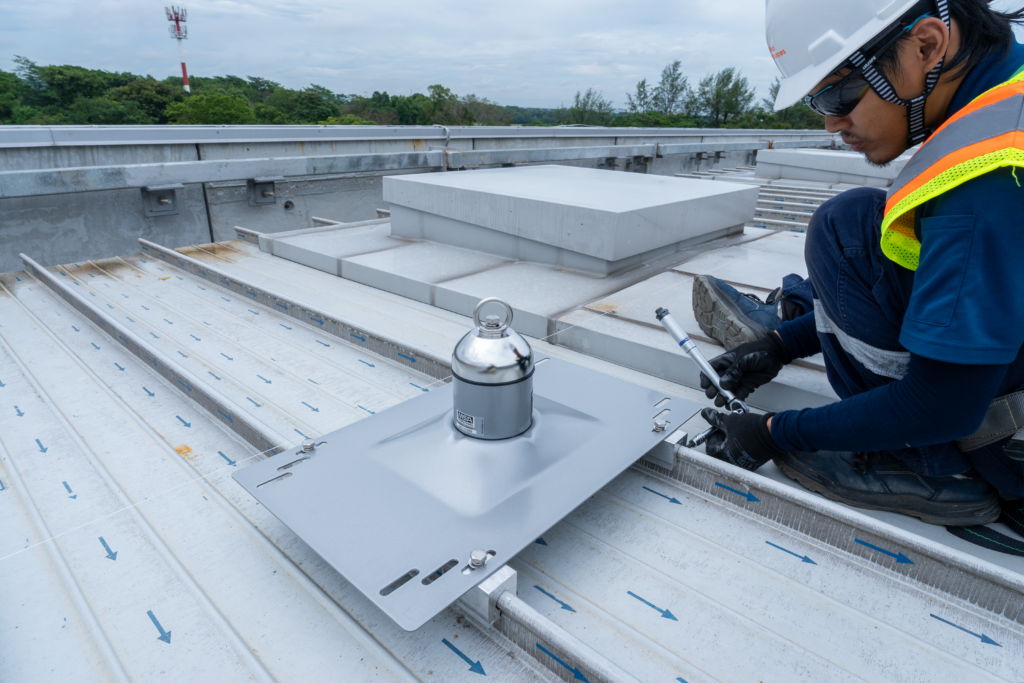
- Anchorage posts or brackets, fixed to the structure (e.g., roof beams, standing seams, or walls).
- A stainless steel cable or rail, stretched horizontally between anchor points.
- A traveller or shuttle, which connects the worker’s lanyard to the line and moves freely along it.
- Energy absorbers that reduce impact forces during a fall.
This system provides constant fall protection while offering the flexibility needed to perform maintenance, cleaning, or inspection tasks across complex elevated surface.
A good HLL solution should strive to achieve the following:
- Minimal roof penetration: preserving waterproofing and roof integrity
- High user mobility: allowing users to work freely on the elevated surface
- Ease of inspection and relatively low maintenance
- Compliance with international fall protection standards
Why Choose a Horizontal Lifeline System?
HLL are ideal for environments that require both freedom of movement and continuous protection. Common applications include:
- Rooftop maintenance for air-conditioning servicing and inspections.
- Bridge and gantry access for inspection or repair works.
- Marine and offshore facilities for cargo handling or deck operations.
- Industrial plants where overhead clearance or structure complexity prevents use of vertical systems.
By integrating a horizontal lifeline system, employers can enhance worker mobility, reduce setup times, and maintain compliance with workplace safety regulations and hence improve operational efficiency.
Safety Beyond Installation
Installing a horizontal lifeline system is just one part of a complete fall protection strategy. Regular inspection, recertification, and worker training are equally vital to ensure long-term reliability.
At United Resources, we provide a full suite of work-at-height safety services, from engineering design and product selection to installation, inspection, and training. Our goal is simple: to help organisations build safer, more compliant workplaces where every worker can perform confidently at height.
A good horizontal lifeline system provides peace of mind and true safety. Because true safety is found in the freedom to work, move, and return home safely.