The record-breaking European heatwave has brought renewed attention to the effects of rising global temperatures. While much of the discussion has focused on heat exhaustion and heat stroke, there is another workplace hazard that deserves equal attention: ultraviolet (UV) radiation.
Unlike heat, UV exposure is invisible. Workers may not realise the damage until hours later, or even years down the road. For those working outdoors, daily sun exposure can significantly increase the risk damage that’s more than just skin-deep.
As temperatures continue to rise around the world, sun protection is becoming an increasingly important part of workplace safety.
UVA and UVB
To understand the risks of UV radiation, it’s important to understand the difference between UVA and UVB rays.
UVA rays penetrate skin deeply and causes premature cell aging. They consist of around 95% of all UV rays that reach us.
UVB rays make up the rest, and cause immediate damage to our skin’s surface, causing sunburn and increased risk of skin cancer.
With two kinds of harmful UV rays to contend with, it’s important we choose the right kind of sunscreen to protect our workers.
Why Broad-Spectrum Protection Matters
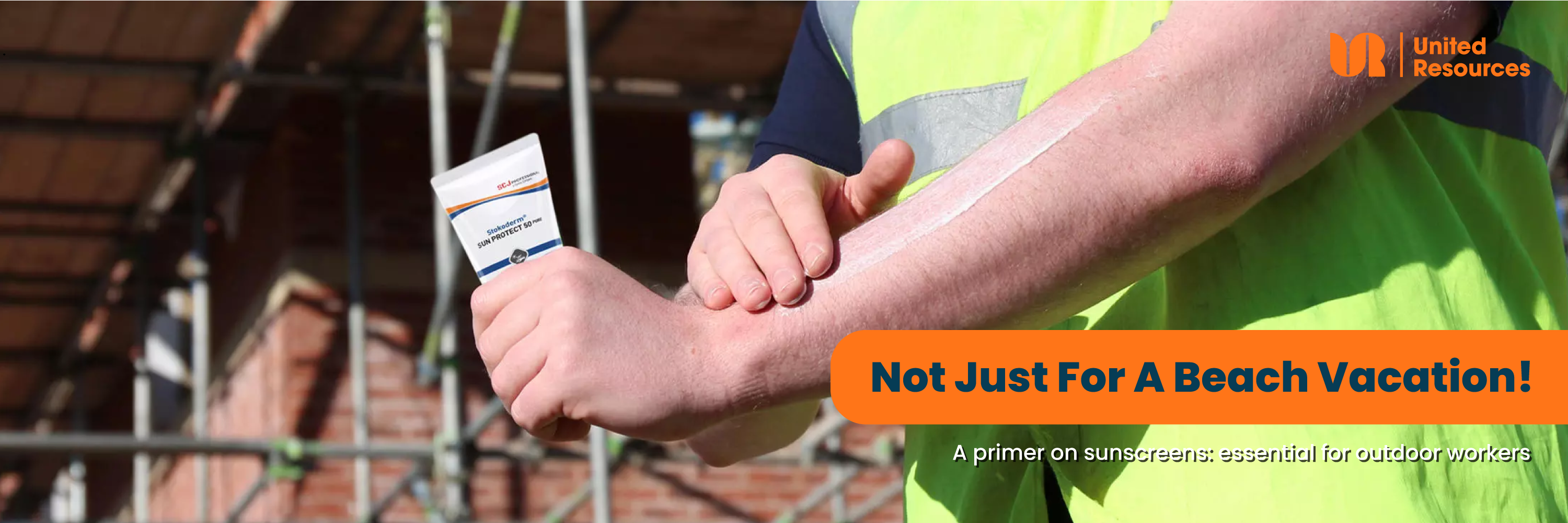
For outdoor work, always choose a broad-spectrum sunscreen, which protects against both UVA and UVB radiation. Sunscreen is rated using the SPF system:
Understanding SPF
SPF stands for Sun Protection Factor. It measures how effectively a sunscreen protects the skin from UVB rays, the primary cause of sunburn.
Higher SPF values provide greater protection, although the increase is not linear.
As a general guide:
- SPF 15 blocks approximately 93% of UVB radiation.
- SPF 30 blocks approximately 97%.
- SPF 50 blocks approximately 98%.
- SPF 50+ provides the highest level of UVB protection available in consumer sunscreens.
No sunscreen blocks 100% of UV radiation, which is why sunscreen should always be used alongside other protective measures.
Which SPF Is Suitable for Outdoor Work?
For workers who spend long hours outdoors, most occupational health professionals recommend:
- Broad-spectrum SPF 50+
- Water-resistant or sweat-resistant formulations
- Reapplication every two hours
- More frequent application after heavy sweating or washing
Applying sunscreen once at the start of the shift is rarely enough for all-day protection. Give your workers the rest time required to reapply sunscreen throughout their shifts.
Sunscreen Is Only One Layer of Protection
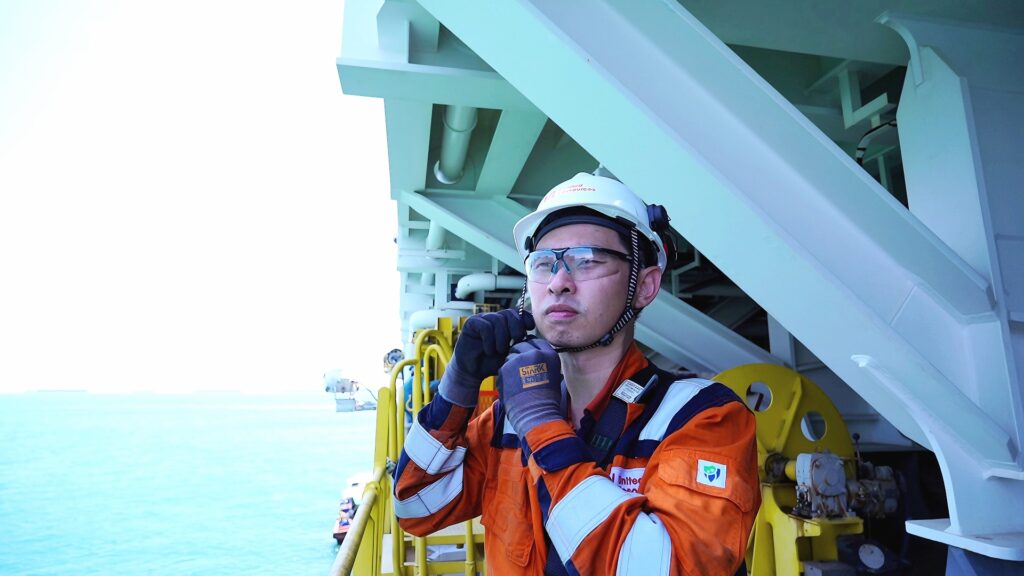
The most effective sun safety programme combines sunscreen with other protective measures.
These include:
- UV-protective safety glasses
- Long-sleeved lightweight workwear
- Neck flaps or wide-brim attachments for safety helmets
- Adequate hydration
- Regular breaks in shaded or cooled areas
- Scheduling physically demanding work outside peak UV hours where possible
For additional protection, URSAFE carries a range of coveralls that carries UPF ratings. Think of UPF as the clothing equivalent of SPF: it measures the percentage of ultraviolet rays the garment prevents from reaching a wearers’ skin. Similar to SPF, UPF50+ is the maximum and prevents over 98% of UV radiation from touching covered skin. By combining UPF and SPF rated protection, workers are spared from the worst effects of UV damage.
UV Protection and Heat Stress Go Hand in Hand
Extreme heat and UV exposure often occur together.
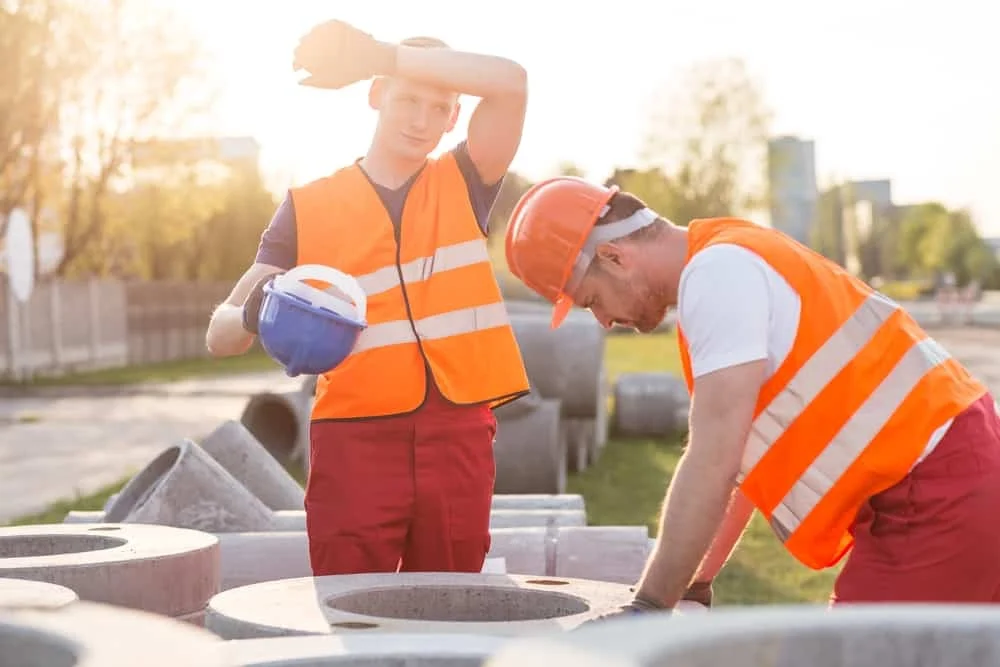
Workers experiencing heat stress may sweat more, causing sunscreen to wear off faster. At the same time, intense sunlight increases the risk of sunburn and long-term skin damage.
This makes regular reapplication especially important in hot and humid climates such as Singapore.
Preparing for a Warmer Future
Events such as the recent European heatwave remind us that climate-related workplace hazards are becoming more frequent and more severe.
While organisations are investing in cooling solutions, hydration programmes, and heat stress management, UV protection should be considered part of the same conversation.
Protecting workers from the sun is not simply about preventing discomfort today. It is about reducing cumulative exposure that can affect their health years into the future.
At United Resources, we believe workplace safety is about preparing for evolving risks. As global temperatures continue to rise, simple measures such as choosing the right sunscreen, wearing appropriate PPE, and planning work around environmental conditions can make a meaningful difference.
Because protecting your team means protecting their present as well as their future.