Singapore’s heat is nothing new, but the way workplaces manage heat stress continues to evolve.
With rising temperatures and increasing awareness of occupational heat risks, Singapore’s Ministry of Manpower has enhanced its Heat Stress Management Framework. From 1 December 2026, four measures that were previously recommended will become mandatory for employers with workers exposed to heat: heat stress training, cool drinking water near work areas, emergency supplies such as cold water, ice packs or water spray, and suitable clothing to mitigate excessive heat stress.
These requirements sit alongside existing heat stress controls, including acclimatisation, WBGT monitoring, hydration, rest and shade, work rescheduling and emergency response planning.

Understanding the heat stress risk
Heat stress is not determined by air temperature alone.
Singapore’s framework uses Wet Bulb Globe Temperature (WBGT), which accounts for factors including temperature, humidity, wind and solar radiation. Certain workplaces such as shipyards are required to have on-site WBGT meters for localised measurements.
As WBGT increases, additional controls come into play.
At WBGT levels of 32°C and above, for example, workers performing heavy physical work must receive minimum hourly rest breaks. At 33°C and above, the required minimum is 15 minutes per hour, with longer breaks recommended as WBGT increases. Workers should also be regularly hydrated, with MOM recommending at least 300 ml per hour at higher WBGT levels, depending on work intensity.
This demonstrates an important principle: Heat stress management cannot be solved by one magic policy or PPE. It has to be dynamic and utilise many resources to account for varying temperatures and risks.
Prevention comes first
The first response to heat stress should always be prevention.
Employers should assess the work environment and consider:
- Can the work be moved to a cooler time of day?
- Are workers properly acclimatised?
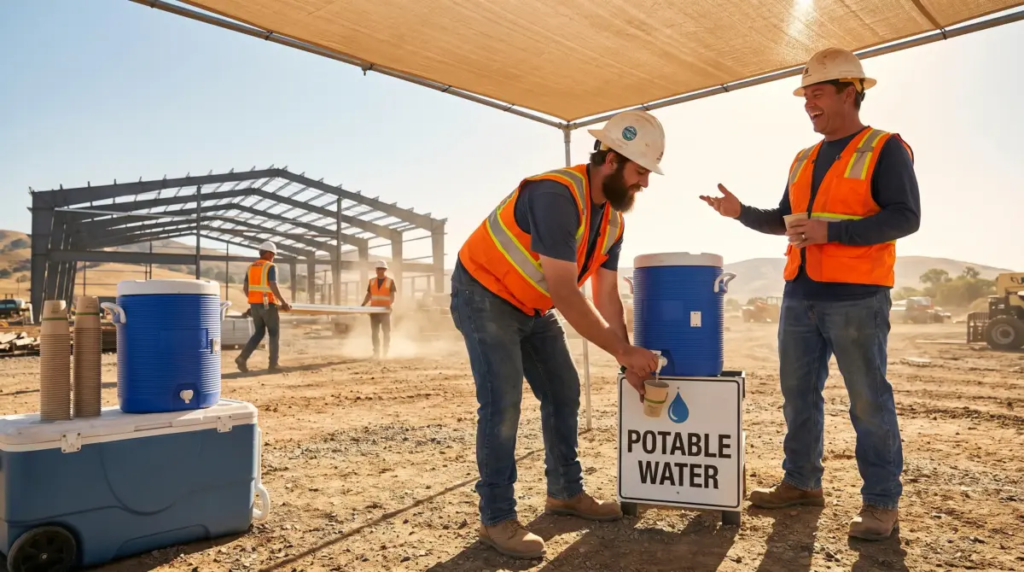
- Is cool drinking water readily available?
- Are rest areas sufficiently close to the work area?
- Is there adequate shade and ventilation?
- Are workers trained to recognise early symptoms?
- Are vulnerable workers appropriately monitored?
- Is there a clear emergency response procedure?
MOM also recommends a buddy system at higher WBGT levels, so workers can look out for one another for signs of heat-related illness.
What happens when prevention is not enough?
Even with good controls in place, heat stress can still occur. This is where emergency preparedness becomes important.
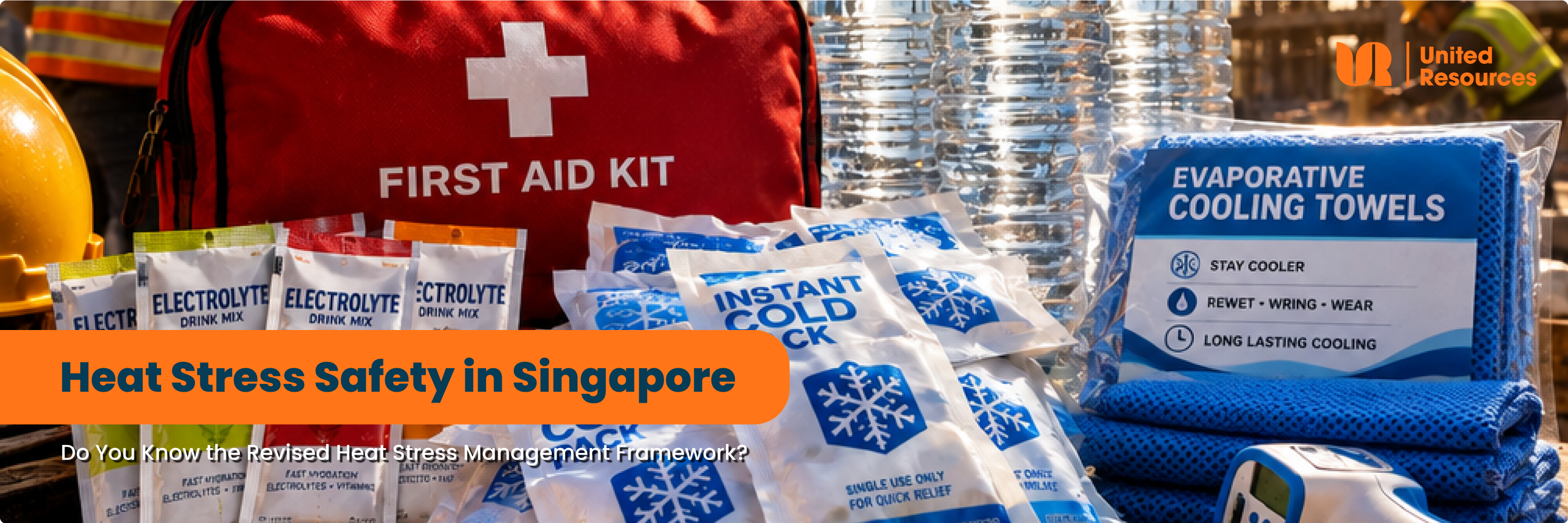
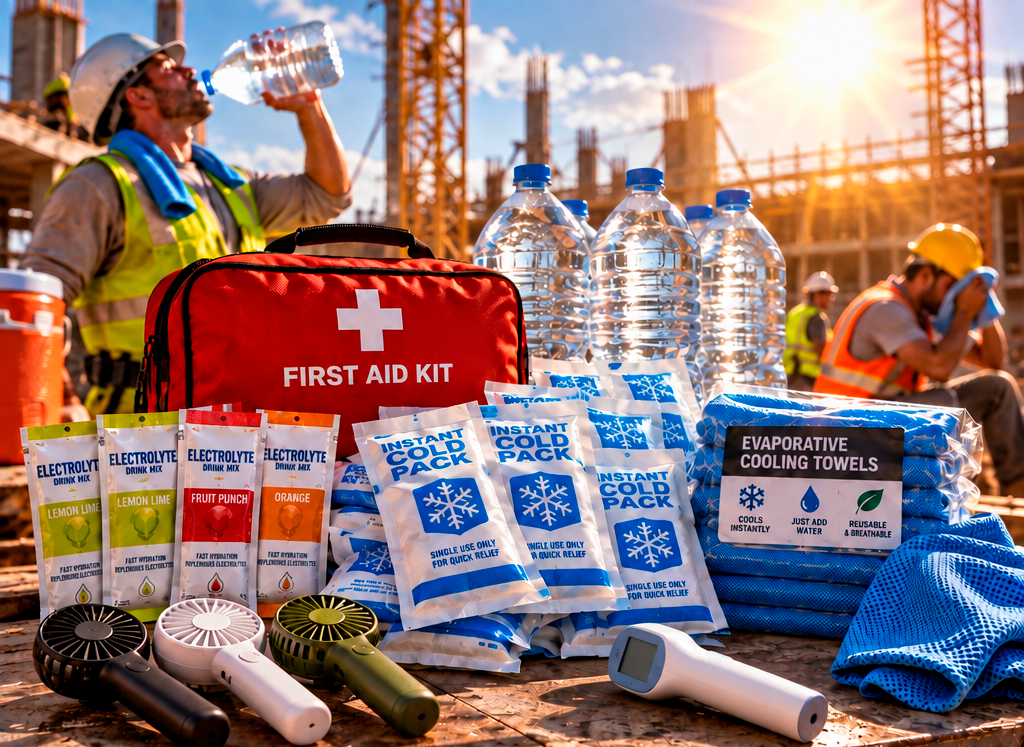
UR’s Heat Stress Emergency Kit provides an additional layer of readiness by combining heat stress response items with general first aid supplies.
What’s inside UR’s Heat Stress Emergency Kit?
Heat Stress Response
- Electrolyte drink sachets
- Instant cold packs
- Cooling towels
- Drinking water bottles
- Non-contact thermometer
- Heat stress advice leaflet
First Aid
- Waterproof plasters
- Elastic and crepe bandages
- Sterile gauze
- Triangular bandage
- Safety pins
- Sterile surgical gloves
- Eye shields / eye shades
- Sterile eye pads
- Emergency eyewash
Additional First Aid Tools
- Bandage scissors
- Intrinsically safe flashlight
- Non-contact thermometer
Medication / Antiseptic Supplies
- Betadine dry powder spray
- Hexodane antiseptic cream
The kit is particularly useful for workplaces where outdoor or hot-environment work forms part of daily operations, providing a centralised response kit that can be kept accessible to workers.
A kit is not a heat stress programme
It is important to make this distinction.
A heat stress emergency kit does not replace proper risk assessment, WBGT monitoring, hydration, rest, acclimatisation, training or other workplace controls.
Instead, it complements them.
The goal is not simply to treat heat stress after it happens. The goal is to create working conditions where heat stress is less likely to happen in the first place, while ensuring that workers are supported if an incident occurs.
With the enhanced requirements coming into force on 1 December 2026, now is a good time for workplaces to review their heat stress management programmes and emergency preparedness.
At UR, we believe good safety preparation means being ready before you need it.
From heat stress emergency kits and PPE to cooling solutions and workplace safety support, we can help organisations build practical layers of protection for workers operating in Singapore’s heat.