From cargo hold cleaning to coating removal on offshore structures, industrial cleaning is about much more than simply washing away dirt. Different contaminants, surfaces, and maintenance work require different cleaning methods, each with their own strengths.
Hydroblasting is a widely used cleaning technology because it offers a flexible, efficient way to clean using only the power of water. With the right pressure, hydroblasting can tackle everything from routine maintenance to ultra-high pressure surface preparation.
What Is Hydroblasting?
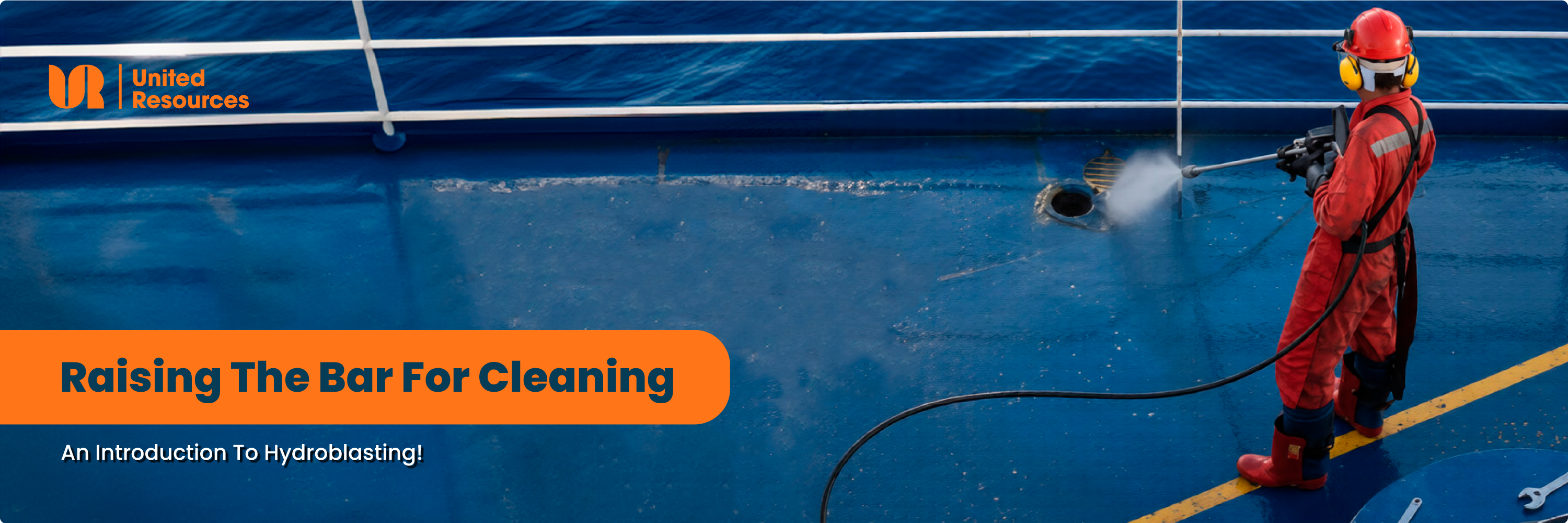
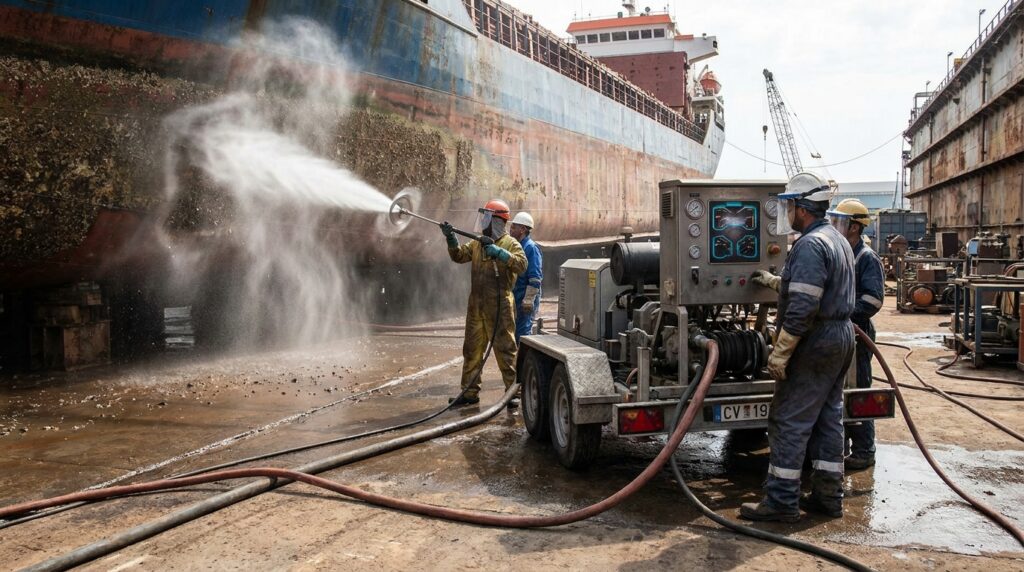
Hydroblasting, also known as high-pressure water jetting, uses pressurised water to remove unwanted materials from a surface.
Depending on the operating pressure, hydroblasting can be used to:
- Wash equipment and facilities
- Clean cargo holds and tanks
- Remove mud, scale, grease, and industrial residues
- Strip paint and coatings
- Remove corrosion
- Prepare steel surfaces before recoating
- Cut concrete or remove marine growth
Because only water is used, hydroblasting does not introduce abrasive media into the work environment, significantly reducing the need for cleaning chemicals afterwards.
Understanding Hydroblasting Pressure Levels
Hydroblasting is done at certain pressures, measured in bars, and every pressure range is best suited for a specific task.
Low Pressure (Below 100 bar)
- Vehicle washing
- Equipment rinsing
- General facility cleaning
- Dust removal
This level is suitable for routine cleaning where stubborn contamination is not present.
High Pressure (100 to 500 bar)
- Cargo hold cleaning
- Tank cleaning
- Machinery maintenance
- Ship deck cleaning
- Heavy industrial washing
- Removal of grease, mud, and product residues
This pressure range is commonly used throughout the marine industry and forms the backbone of many maintenance operations.
Very High Pressure (500 to 1,700 bar)
- Surface preparation before painting
- Removal of deteriorated coatings
- Rust removal
- Heavy scale removal
- Industrial maintenance shutdowns
At these pressures, water begins to remove surface coatings, cleaning the steel beneath, reducing the need for abrasive media in many maintenance applications.
Ultra-High Pressure (Above 1,700 bar)
Ultra-high pressure (UHP) water jetting represents the strongest level of hydroblasting technology.
Applications include:
- Complete coating removal
- Marine growth removal
- Concrete removal
- Cutting applications
- Critical surface preparation for protective coatings
UHP cleaning is widely used in shipyards, offshore platforms, refineries, and heavy industrial facilities where extreme cleaning performance is required.
Hydroblasting vs Abrasive Blasting
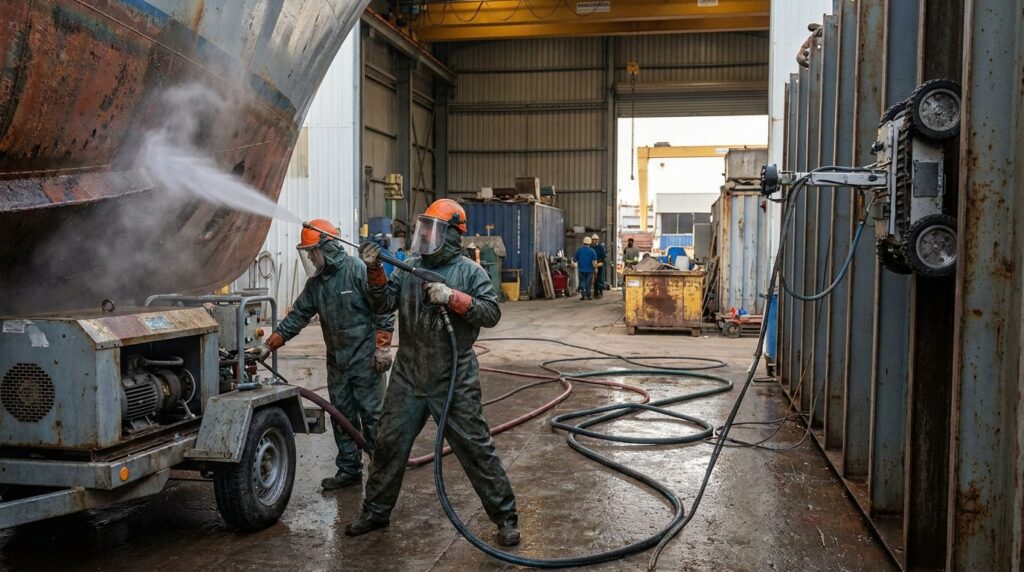
Although both methods can be used for surface preparation, they have their own list of pros and cons.
Hydroblasting
- Uses only water
- Produces little to no airborne dust
- No spent abrasive media to collect
- Can clean and prepare surfaces simultaneously
- Suitable for environmentally sensitive areas
- May not produce the same surface profile as abrasive blasting where specific coating specifications require it.
Abrasive Blasting
- Achieves the surface roughness necessary for certain coatings
- Highly effective for removing heavy corrosion and old coatings
- Generates significant dust
- Requires abrasive media
- Produces additional waste for collection and disposal
- Often requires greater containment measures
The choice depends on the coating system, environmental requirements, and project specifications.
Hydroblasting vs Chemical Cleaning
Chemical cleaning remains valuable for certain applications, particularly where contaminants need to be dissolved rather than physically removed.
Hydroblasting
Best suited for:
- Dirt and mud
- Rust
- Paint
- Scaling a surface
- Surface preparation
Chemical Cleaning
Best suited for:
- Oils and grease
- Mineral deposits
- Certain process contaminants
- Cleaning applications where water pressure alone is insufficient
Chemical cleaning requires careful selection of compatible products, proper PPE, and responsible handling and disposal procedures.
At many workplaces, hydroblasting and chemical cleaning are used together as complementary maintenance methods rather than competing solutions.
Choosing the Right Solution
Selecting the correct cleaning method depends on several factors:
- Type of contamination
- Surface material
- Desired finish
- Environmental considerations
- Waste management requirements
- Coating specifications
Using excessive pressure is not always beneficial. Matching the cleaning method and pressure to the specific cleaning task delivers better efficiency while protecting both equipment and surfaces.
A Complete Hydroblasting Solution
Routine cargo hold cleaning, industrial maintenance, surface preparation and ultra high pressure cleaning are very different types of cleaning. Hydroblasting can handle all these, but the pressure required for each task varies.
The Combijet range provides solutions across the full spectrum of hydroblasting applications, from high-pressure cleaning units for day-to-day maintenance to very high and ultra high pressure systems for demanding industrial and marine operations.
At United Resources, we work with customers to identify the most suitable hydroblasting solution for their application, ensuring the right equipment, pressure, and cleaning method are selected for every job.