Cable Wires vs Certified Lifelines: Why the Difference Matters
Working at height in marine environments comes with unique challenges. Gangway rigging, ladder access, and vessel maintenance often rely on cable wires or span wires for fall protection. While these may appear sufficient, these uncertified systems introduce serious risks.
Understanding the difference between regular span wires and certified lifelines is essential for maintaining safe operations.
Part 1: What Is the Difference Between a Regular Span Wire and a Certified Lifeline?
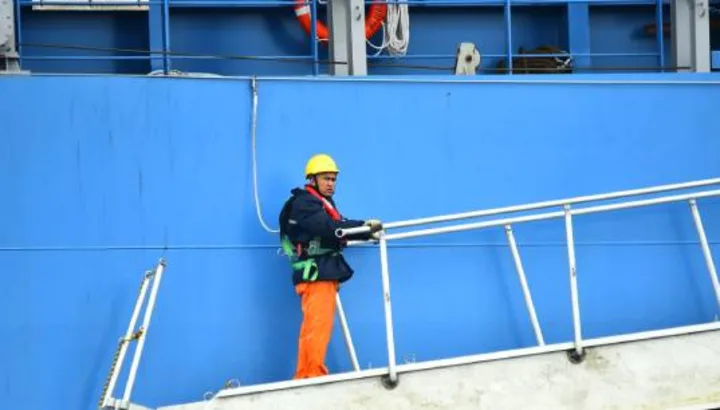
Uncertified Span Wires
Regular cable wires are not designed for fall protection. While they may function as a basic anchor point, they typically lack critical safety features:
❎ No defined safety standards or certification
❎ No energy absorber to reduce fall impact forces
❎ No engineered crimping or termination mechanisms
❎ No structured fall protection system design
❎Tension reliability may degrade over time
These systems may hold under static conditions, but in the event of a fall, the forces generated can exceed what the cable can handle.
This is especially concerning in marine environments, where corrosion, salt exposure, and vibration can further weaken components over time.
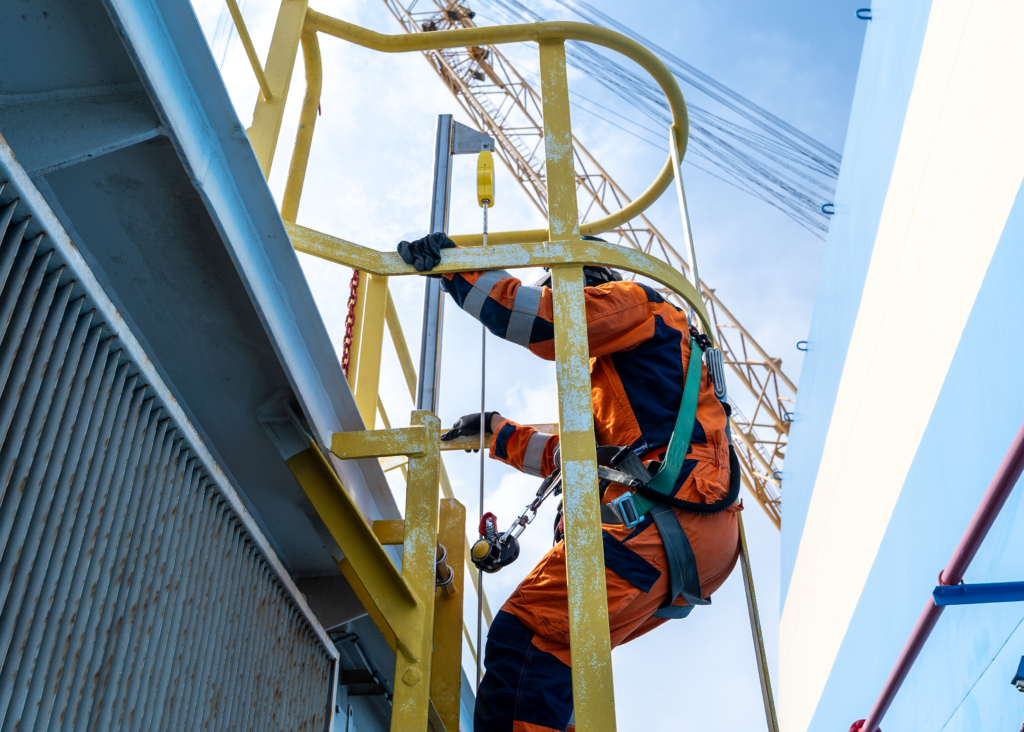
Certified Lifeline Systems
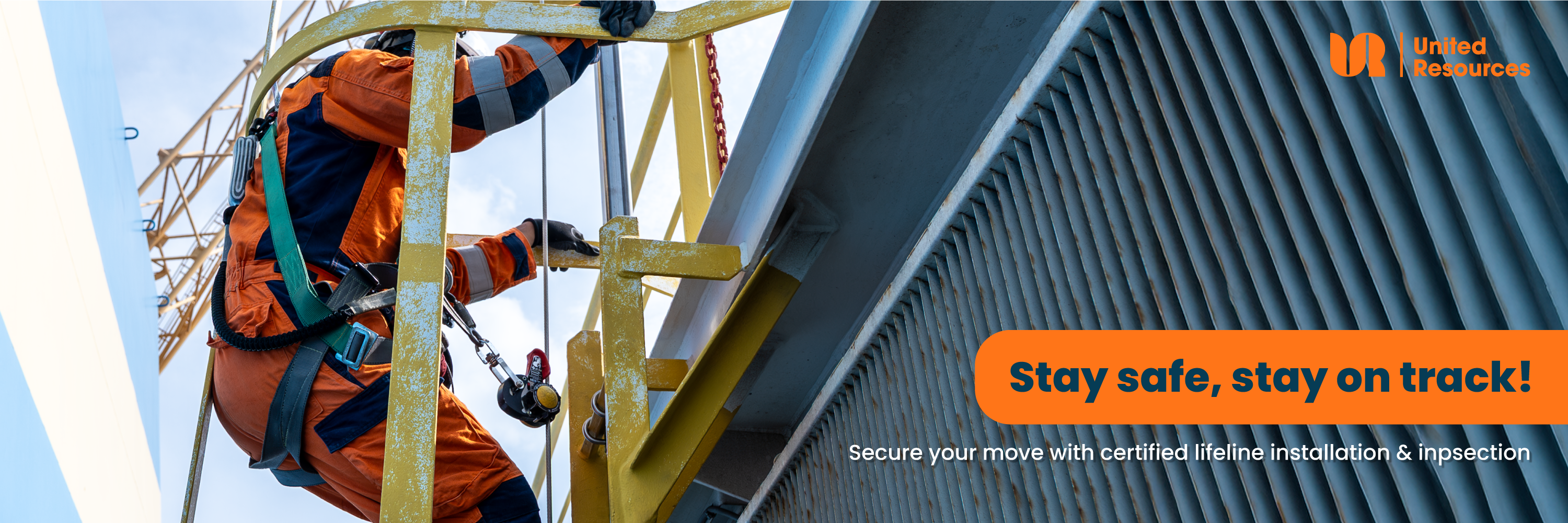
Certified lifelines are engineered specifically for fall protection. Systems such as those from MSA Safety are designed with:
✅Engineered load calculations
✅Certified safety standards compliance
✅Energy absorption systems to reduce fall forces
✅Proper crimping and termination mechanisms
✅Designed tensioning systems
Don’t take the risk: tested and verified anchorage solutions are the reliable choice.
These systems are available as:
- Horizontal lifelines for gangway rigging, walkway access and safety when working near edges
- Vertical lifelines for ladder climbing and vertical movement
The result is a complete fall protection system designed to perform reliably in real working conditions.
Part 2: The Importance of Inspection and Maintenance
Installing a certified lifeline is only the first step. Regular inspection and maintenance are essential to ensure the continued reliability of the lifeline.
United Resources provides annual inspection services, which include:
- Physical condition checks
- Corrosion inspection
- Tension verification
- Component integrity assessment
- Compliance documentation
In addition, UR supports customers with:
- Site analysis and risk assessment
- System design recommendations
- Professional installation
- Ongoing maintenance and inspection
Think of us as a one-stop shop that journeys with you every step of the way. From assessment to installation and long-term inspection, we’ve got you covered.
The Bottom (Life)Line
At first glance, a cable wire and a certified lifeline may look similar. In practice, they differ greatly in engineering, testing, and reliability.
When working at height, especially in marine environments, the right system can make all the difference. Investing in certified lifelines and proper inspection ensures safer operations, stronger compliance, and greater peace of mind.