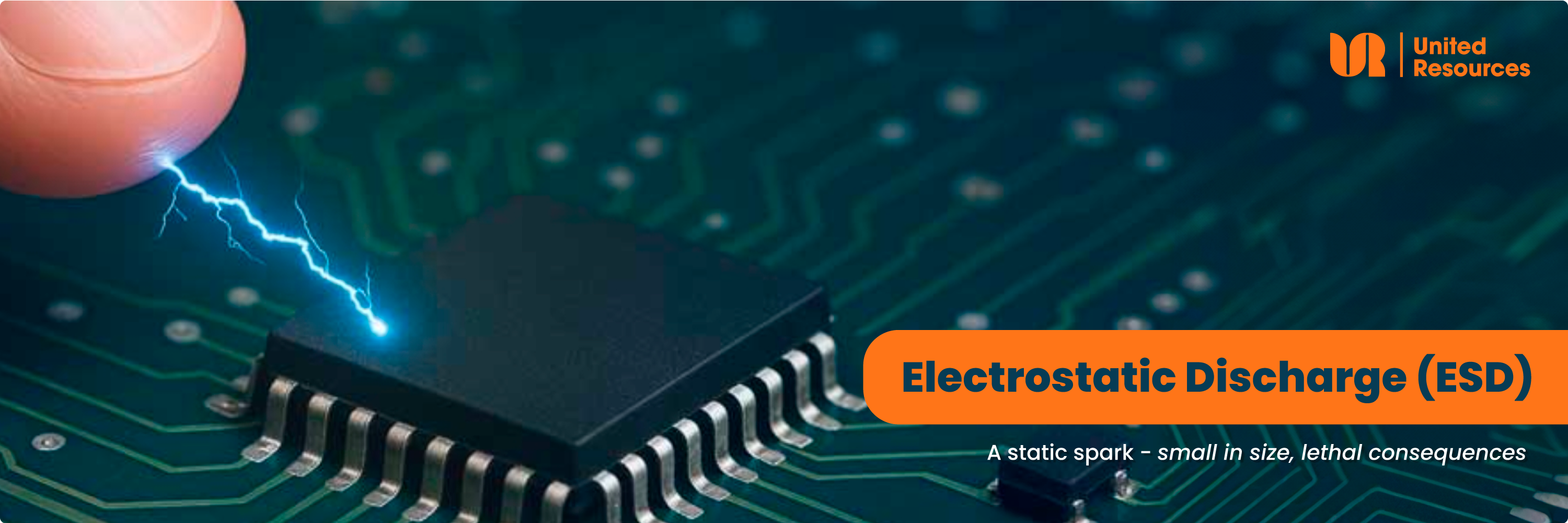
Electrostatic Discharge (ESD): An Invisible Risk with Real Consequences
Electrostatic discharge (ESD) is an often-overlooked hazard because it cannot be seen, heard, or even felt in many cases. Yet, a static spark too small for a person to notice can cause costly, irreversible damage: corrupting electronic components, compromising product quality, or triggering dangerous incidents in high-risk environments. As workplaces become increasingly dependent on sensitive electronics and automated systems, controlling ESD has never been more important.
Where Do ESD Risks Exist?
Whenever electronics are involved, ESD should be a key consideration. This is especially true in environments such as:
- Electronics and semiconductor manufacturing
- Circuit board and micro component assembly
- Maintenance or inspection of sensitive electrical equipment
- Cleanrooms and ESD-protected areas (EPAs)
- Pharmaceutical, medical device, and precision instrument production
In these settings, ESD events can lead to immediate failures or latent defects. Products damaged by ESD may fail prematurely, even if they pass inspections. This might result in heavy costs arising from warranty claims, reputational damage, and production downtime.
ESD and Explosion Risk Environments
Beyond product damage, ESD presents a serious safety concern in explosion-risk environments. In areas where flammable gases, vapours, dusts, or solvents are present, a static discharge can act as an ignition source.
Industries such as chemical processing and oil and gas often operate in ATEX hazardous zones. In these environments, controlling static electricity is critical. A single uncontrolled discharge from clothing, gloves, or tools can be enough to ignite a flammable atmosphere. This is why ESD control is not only about protecting electronics; it is also about protecting people, assets, and facilities.
Antistatic vs ESD PPE: Understanding the Difference
The terms “antistatic” and “ESD” are often used interchangeably, but they are different in several ways.
Feature |
Antistatic |
ESD (Electrostatic Discharge) |
|---|---|---|
| Purpose | Prevents buildup/sparking | Safely discharges/dissipates static |
| Resistance | Higher (10⁹ – 10¹¹ Ω) | Lower (10⁴ – 10⁹ Ω) |
| Grounding | Often not required | Essential |
| Protects | Personnel / Environment | Sensitive electronic components |
| Example Use | Fuel depots, factories | Cleanrooms, labs, electronics repair |
Antistatic PPE
Antistatic equipment is designed to reduce the buildup of static electricity. While they limit charge generation, they do not regulate how static is released. While antistatic PPE can lower the risk of ESD, they do not provide a predictable or controlled discharge path for static. Used to prevent static sparks in environments with flammable materials, dust, or for general comfort.
ESD-rated PPE
ESD PPE is specifically tested and certified to dissipate electrostatic charge safely and in a controlled manner, within a defined resistance range. This controlled dissipation is much more effective at preventing sudden sparks that could damage sensitive components or ignite flammable atmospheres. Crucial for environments with sensitive electronics, such as manufacturing, cleanrooms, and data centers, where even a small discharge can cause damage.
In short:
Antistatic: Prevents the accumulation of static electricity on a person or object, typically by inhibiting charge generation.
ESD: Controls the discharge (dissipation) of accumulated static, safely releasing it to the ground.
For environments involving sensitive electronics or explosion risks, ESD-rated PPE is the appropriate choice.
The Importance of a Complete ESD System
Effective ESD protection must be part of a complete system, starting at the point of contact. Gloves, footwear, clothing, grounding, and workplace controls all work together to manage static electricity. Gloves are especially critical, as hands are often the primary interface between workers and sensitive components.
ESD-rated gloves protect both the worker and the product while maintaining dexterity, comfort, and compliance. They allow static charge to dissipate safely without compromising grip, tactile sensitivity, or cut protection.

ESD Glove Solutions from UR
At United Resources, we support ESD-safe workplaces with certified PPE solutions that meet both safety and performance requirements. The URSAFE STARK series of gloves is a good example. This series focuses on ESD protection while providing resistance to physical impact and flexibility for the job at hand.
Choosing the right PPE helps safeguard your people, your products, and your processes. If your workplace handles sensitive electronics or operates in explosion-risk environments, ESD protection should be built into your PPE strategy, not added as an afterthought.